

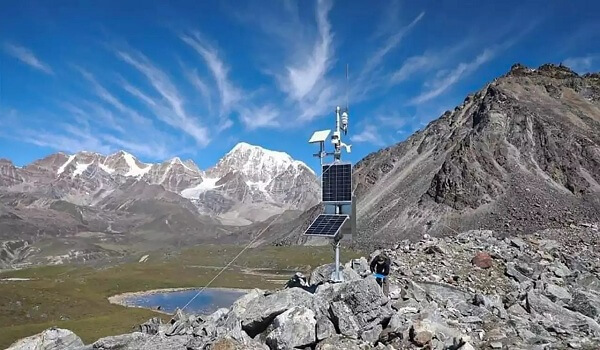
Glacial lakes and other water bodies across the Himalayan region saw a 10.81% increase in area from 2011 to 2024 due to climate change, signalling a heightened risk of glacial lake outburst floods (GLOFs), according to a Central Water Commission’s (CWC) report.
Central Water Commission (CWC)
- It is a premier technical organization of India in the field of water resources.
- It is presently functioning as an attached office of the Ministry of Jal Shakti, Department of Water Resources, River Development, and Ganga Rejuvenation, Government of India.
Main Functions of Central Water Commission
The scope of functions of the Central Water Commission is very wide. Its major functions include
- Flood Control: Collaborating with the State Governments for flood management across the country.
- Irrigation and Hydropower: To increase irrigation and power generation by using water resources.
- Navigation and Drinking Water Supply: To provide waterway transport and safe drinking water.
- Monitoring of Schemes: To examine, formulate and implement various schemes on water resources as per requirement.
Organizational Structure
- The Central Water Commission is headed by a Chairman who has the rank of ex-officio Secretary to the Government of India. The Commission is divided into three branches, each of which is headed by a full-time Member who has the rank equivalent to Additional Secretary to the Government of India:
- Design and Research (D&R) Wing
- River Management (RM) Wing
- Water Planning and Projects (WP&P) Wing
The National Water Academy, located in Pune, provides training to Central and State level engineers under the Commission. This academy functions directly under the guidance of the chairman of the commission.
Glacial lakes
- Glacial lakes are water bodies that form in front of, above or below melting glaciers. As the glacier retreats, it leaves a depression behind it, which fills with meltwater.
- These lakes have increasing area and their banks are made up of unstable ice, loose rock and debris. If any of the banks breaks, a huge amount of water flows rapidly towards the downstream areas, which is called a glacial lake outburst flood (GLOF).
- This type of flood can cause devastation in the area and can have a serious impact on life.