

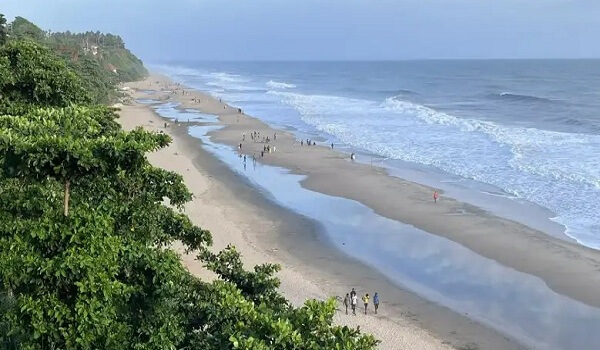
The Ministry of Environment, Forest and Climate Change has approved the Coastal Zone Management Plan (CZMP) for 10 coastal districts of Kerala, which include districts like Kasargod, Kannur, Kozhikode, Malappuram, Thrissur, and Ernakulam. The plan aims to manage human activities in the coastal areas in a planned manner and preserve their ecology.
Aligned with Coastal Regulation Zone (CRZ) Notification, 2019: The scheme is aligned with the Coastal Regulation Zone (CRZ) Notification, 2019, which allows:
- Coastal districts have been asked to take advantage of the relaxation in Coastal Regulation Zone (CRZ) norms and undertake development activities, including construction of buildings facing the sea.
| Coastal areas It is a transition zone between the maritime and territorial zones .It includes coastal ecosystem, wetland ecosystem, mangrove ecosystem, mudflat ecosystem, seagrass ecosystem, salt marsh ecosystem and seaweed ecosystem. High Tide Line (HTL) HTL means the line on the site up to which the highest water line reaches during spring tide. Low Tide Line Similarly, it means the line on the land up to which the lowest water line reaches during spring tide. |
Coastal Regulation Zones (CRZs)
- Definition: Coastal Regulation Zone (CRZ) is an area along the coast designated with specific regulations to protect and manage the coastal environment.
- These zones were first introduced in India in the year 1991 under the Environment Protection Act, 1986.
Key features of CRZ
- Objective: The objective of CRZ regulations is to conserve coastal ecosystems, protect livelihoods of communities dependent on coastal resources, and ensure sustainable development by restricting harmful activities.
- Regional Division: Coastal areas are divided into categories based on their ecological sensitivity, status of development and population density.
- Each zone has different rules about what activities can and cannot take place.
- ‘No Development Zones’ (NDZs): A certain distance from the high tide line (HTL) in each zone is designated as NDZs, where construction and industrial activities are prohibited to prevent damage to the coast.
- Scope: CRZs include coastal land up to 500 metres from the high tide line (HTL) and a step of 100 metres along bays, estuaries, backwaters and rivers where tidal fluctuations occur.
- Roles and Responsibilities in CRZ Implementation: Although the Union Ministry of Environment, Forest and Climate Change frames the CRZ Rules, the state governments are responsible for ensuring their implementation through their respective Coastal Zone Management Authorities.
Importance of Coastal Regulation Zones
- Environmental protection: The CRZ rules aim to conserve coastal ecosystems, including beaches, mangroves and coral reefs, which are important for biodiversity and ecological balance.
- Disaster risk reduction: By regulating construction and development in vulnerable coastal areas, CRZ helps reduce risks from natural disasters such as tsunamis, cyclones and rising sea levels.
- Habitat Conservation: Protects critical habitats for a variety of marine and terrestrial species, contributing to the conservation of flora and fauna that depend on coastal ecosystems.
- Community Livelihoods: Supports the livelihoods of local communities dependent on fishing, tourism and other coastal activities while maintaining healthy ecosystems that provide essential resources.
- Regulatory framework: Establishes a clear legal and regulatory framework for coastal development, guides land-use planning and ensures compliance with environmental standards.
- Promoting Tourism: Encourages eco-friendly tourism by protecting natural beauty and promoting responsible tourism practices, which can boost the local economy without harming the environment.
- Climate Change Mitigation: By preserving coastal areas and ecosystems, CRZs contribute to carbon sequestration and help reduce the impacts of climate change on sensitive coastal areas.