

Parliamentary Standing Committee on Industry has recently put forth crucial recommendations regarding the extension and enhancement of the Faster Adoption and Manufacturing of (Hybrid &) Electric Vehicles in India (FAME India) Scheme Phase-II.The committee suggests extending the FAME India Phase-II Scheme’s deadline by at least three more years to facilitate the transition momentum to electric mobility.The current deadline is March 31, 2024, with a budget allocation of Rs 10,000 crore.
Committee Recommendations for Improvement
Restoration of Subsidy on Electric Two-Wheelers
- The committee suggests restoring the subsidy on electric two-wheelers, which was reduced in June 2023.
- Government reduced the FAME-II subsidy for electric two-wheelers after June 1, 2023.
- The initial 40% incentive on ex-factory price was cut to 15%. Reduction in subsidies negatively impacted electric two-wheeler sales. Budget constraints cited as a reason for subsidy reallocation.
- It also recommends projecting enhanced budget allocations, if required, to maintain the momentum and pace of electric vehicle penetration.
Inclusion of Private Electric Four-Wheelers
- The ministry should increase the number of electric vehicles supported in the four-wheelers category and include private electric four-wheelers in the FAME-II Scheme, with a cap based on the cost and battery capacity of the vehicle.
Supportive Government Frameworks
- The committee emphasizes the need for supportive, transparent, and consistent government frameworks at national, state, and local levels to make India a global EV hub.
- It also recommends focusing on establishing dedicated manufacturing hubs and industrial parks for batteries, cells, and EV auto components.
Funding for BHEL and Charging Stations
- More funds should be allocated to Bharat Heavy Electricals Limited (BHEL) to facilitate popularizing EV mobility.
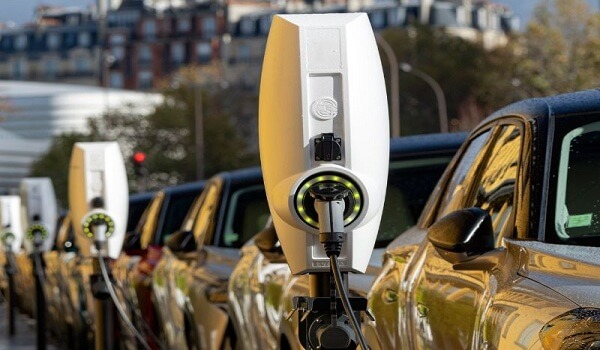
- BHEL provided Engineering, Procurement, and Construction (EPC) solutions for EV charging stations. These include solar-based charging stations and battery energy storage systems.
- Additionally, public sector undertakings and government institutions should participate in installing charging stations on their premises.
Incentivizing Charging Station Installation
- FAME-II should incentivise individual investors in charging stations. Women’s self-help groups and cooperative societies should be assisted in opening and operating charging stations, with assured returns provided by the government from its funds.
FAME India Scheme
- FAME India is a part of the National Electric Mobility Mission Plan.
- The scheme’s main objective is to encourage the adoption of electric and hybrid vehicles by offering upfront incentives on purchase.
- The scheme covers Hybrid and electric technologies like Mild Hybrid, Strong Hybrid, Plug-in Hybrid and battery Electric Vehicles.
Phase I
- Started in 2015 and was completed on 31st March 2019, with an outlay of Rs 895 crore.
- The 1st phase of FAME The scheme had four focus areas namely, technology development, demand creation, pilot project, and charging infrastructure.
- Achievements:
- In the 1st phase of the scheme, about 2.78 lakh xEVs were supported with total demand incentives. In addition, 465 buses were sanctioned to various cities/states under this scheme.
FAME India Phase-II
- The Ministry of Heavy Industries is implementing the scheme for five years, starting April 1, 2019, with a total budget of Rs. 10,000 crore.
- This phase mainly focuses on supporting the electrification of public & shared transportation and aims to support through demand incentive eBuses, e-3 Wheelers, e-4 Wheeler Passenger Cars and e-2 Wheelers.
- In addition, the creation of charging infrastructure is also supported under the Scheme.