

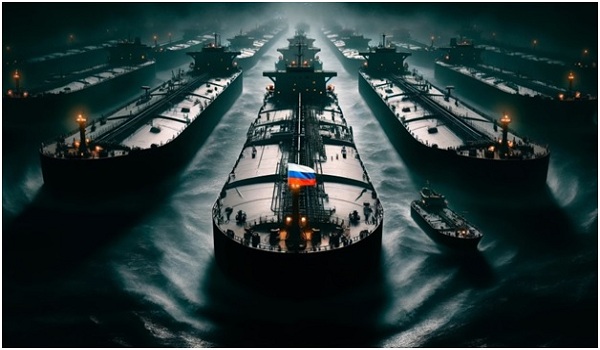
The US has imposed sanctions targeting Russia’s ‘Shadow Fleet’ with the aim of curbing oil trade with Russia. This move can increase freight cost, which can affect India’s oil suppliers in West Asia.
Russia’s ‘Shadow Fleet’
- ‘Shadow Fleet’ is a tanker network that helps in transporting Russian oil to international markets secretly.
Key features of Shadow Fleet
- Lack of transparency in ownership of ships: Ownership of ships is hidden through complex corporate structures and shell companies.
Ship-to-ship transfer (transfer of oil at sea)
- Oil is transferred from one ship to another at sea.
- Its purpose is to hide the origin of the oil and transport it to the final destination.
Use of Flags of Convenience
- Oil ships operate under flags of countries that have weak regulatory oversight.
- Shadow fleet: The shadow fleet comprises of older tankers that are considered less suitable for mainstream operations due to higher maintenance costs and lower efficiency.
Deceptive activities and fraud
- Switching off AIS tracking: Automatic Identification System (AIS) is switched off to hide the location of ships.
- Manipulation of documents: Documents of origin of cargo are misrepresented.
- Misreporting: Information on the source of cargo is misrepresented to avoid identifying it.
Impact on India
- Dependence on oil supplies from Russia: Russia remained India’s largest crude oil supplier in 2024, accounting for about 38% of India’s total imports.
- Trade disruptions due to sanctions: Indian refiners can fulfill existing contracts until March 12. After that, sanctions may disrupt India-Russia oil trade.
- Managing alternative supplies: India’s overall oil supply will remain stable as alternative supplies are readily available from West Asia.
India accused of supporting shadow fleet
- Increase in Russian oil shipments: Indian companies and Dubai-based entities with Indian ties were accused of being involved in transporting Russian oil, raising suspicions of circumventing sanctions.
- Certification by the Indian Shipping Register (IRS): After the sanctions, the Indian Shipping Register (IRS) certified more ships that were linked to Russian oil, leading it to be considered supporting “shadow fleet” operations.
- Use of flags of convenience: Ships linked to India were often registered under foreign flags, raising suspicions of evading sanctions by concealing their ownership and the source of the cargo.
Russia’s dilemma and price ceiling
- Pressure on shadow fleet: Sanctions have put additional pressure on Russia’s shadow fleet, which operates outside Western sanctions.
- Selling oil below $60 per barrel: To continue exports, Russia may have to sell oil below $60 per barrel, complying with Western price ceilings.
- This will help Russia use Western shipping and insurance facilities.
- Loss in revenue: The move will reduce Russia’s income, but will help continue oil exports to India and China.