

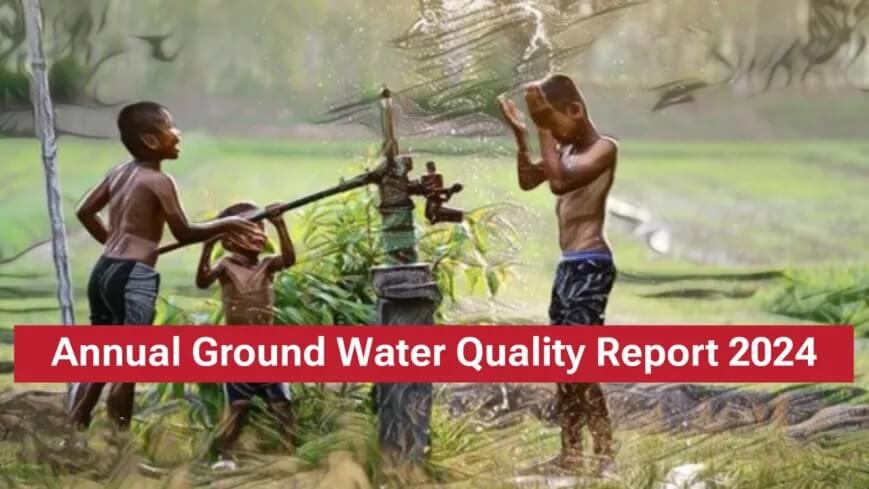
The “Groundwater Quality Report 2024” released by the Central Groundwater Board (CGWB) under the Ministry of Jal Shakti has raised significant concerns about the quality of groundwater in India.
Key points of Groundwater Quality Report 2024
- Groundwater extraction: According to the report, the rate of groundwater extraction in India is 4%.
- Safe blocks: About 73% of the blocks analysed have been placed in the ‘safe’ category, indicating adequate recharge of groundwater resources.
- Nitrate pollution: Excessive nitrate in groundwater has been found in 440 districts as of 2023.
- Rajasthan (49%), Karnataka (48%), and Tamil Nadu (37%) reported the highest rates of nitrate pollution.
- Uranium Pollution: Uranium pollution is a major problem in Rajasthan and Punjab, where most samples surveyed were found to be above 100 ppb (parts per billion).
- Fluoride Pollution: Fluoride pollution is a major concern in states like Rajasthan, Haryana, Karnataka, Andhra Pradesh, and Telangana.
Groundwater Pollution
- Groundwater pollution occurs when pollutants leach into groundwater, making it unsafe for use.
Causes of Groundwater Pollution
Excessive use of fertilizers
- Over-reliance on nitrogen-based chemical fertilizers.
- Leaching of nitrates into groundwater.
Industrial waste
- Discharge of untreated or inadequately treated industrial waste.
- Entry of heavy metals and toxic substances into groundwater.
Geographical features
- Natural pollutants such as arsenic, fluoride, and uranium mix with groundwater in some areas.
Excessive extraction
- Falling of water levels
- Concentration of natural pollutants such as arsenic, uranium and fluoride.
Status of groundwater extraction
Groundwater extraction rate
- The groundwater extraction rate remains at 4%, unchanged since 2009.
- This rate represents the ratio of groundwater withdrawals for agriculture, industry and domestic uses to the total available recharge.
- Groundwater is recharged naturally from rainfall and other sources.
Security of blocks
- 73% of groundwater blocks in India are now classified as “safe areas”, where recharge is equal to or greater than extraction.
- This percentage is set to increase from 4% in 2022 to 73% in 2023.
Main reasons for deterioration in groundwater quality
- Industrialisation: Discharge of untreated industrial effluents, including heavy metals, chemicals and solvents.
- Agricultural practices: Excessive use of fertilizers and pesticides in farming.
- Urbanisation: Pollution from improper waste disposal, sewage leakage and garbage dumps.
- Climate change: Changes in rainfall patterns and excessive extraction affect the recharge of wetlands.