

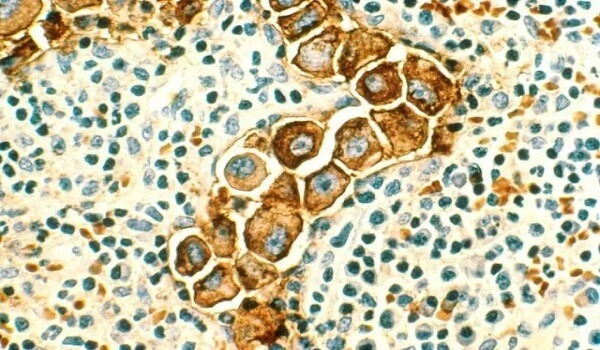
University of East Anglia (UEA) researchers have identified three distinct subtypes of a rare type of bone cancer, osteosarcoma, for the first time. The discovery could lead to significant changes in clinical trials and patient care.
Key points
- Nature of osteosarcoma: This cancer starts in the bones and mainly affects children and adolescents. It has been treated with untargeted chemotherapy and surgery since the 1970s.
- Subtypes identified for the first time: UEA researchers discovered three distinct subtypes. The discovery could open up new possibilities in clinical trials and treatment methods.
- Technical approach: In this study, the researchers used a more advanced method called Latent Process Decomposition (LPD), which takes into account differences within individual tumors.
Features and functionality of LPD
Analysis of tumors
- Unlike traditional methods, LPD views tumors as a mixture of “hidden patterns of gene activity” rather than a uniform structure.
- It uncovers “functional states” of tumors, which each have their own distinctive gene expression patterns.
Identification of subgroups
- Using the LPD method, the researchers identified three distinct subtypes of osteosarcoma.
- One of these subtypes had a poor response to standard chemotherapy called MAP.
Help in classifying patients
- Through this technique, doctors can classify patients according to their subgroup.
- It provides greater accuracy for personalized and targeted treatment methods.
- Significance of the research
- Clinical trials of new drugs on osteosarcoma have been unsuccessful over the past 50 years.
- The research found that the ‘failed’ trials had a response rate of 5-10% to the new drug, indicating the existence of subtypes.
Osteosarcoma
- Osteosarcoma is a type of bone cancer that usually starts in the long bones of the arms or legs. It develops near the joints at the end of the bone, such as the knees, hips or shoulders.
Affected bones
Most commonly affected bones
- Shin bone (tibia)
- Thigh bone (femur)
- Upper arm bone (humerus)
Less common sites
- Jaw
- Pelvis
- Skull
- Soft tissues or organs of the abdomen and chest.
Symptoms
- Bone pain
- Limited movement in joints.
- A lump or swelling near a bone.
- A change in color of the skin.
- Fever.
- Sudden bone breakage (from injuries that would not have been serious under normal circumstances).
Risk factors
- Age: People under 25 years of age, especially teenagers (average age 15 years).
- 3 out of every 4 patients are teenagers.
- Prior cancer treatments:
- Radiation therapy.
- Alkylating agents (cancer drugs).
Treatment and success rate
- Various treatments are available.
- If the cancer has not spread to other parts, 7 out of 10 patients survive.