

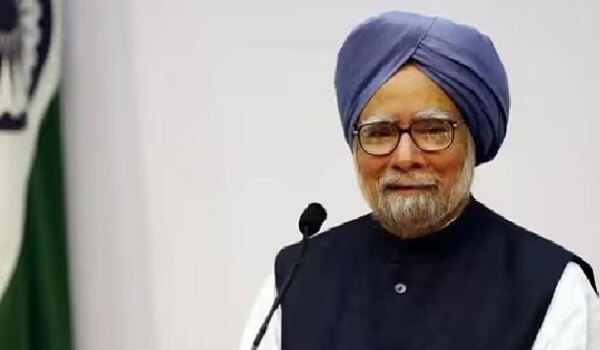
- Former Prime Minister of India Dr. Manmohan Singh died on 26 December 2024 at the age of 92.
- According to media reports, he fainted on 26 December, after which he was brought to AIIMS. Here he breathed his last. In this article we will read about his entire life and achievements.
Dr. Manmohan Singh’s Birth and Education
- Dr. Manmohan Singh was born on 26 September 1932 in a village named Gah in the Punjab province of British India (now in Pakistan). However, after the country became independent in 1947, his family settled in Amritsar.
Education
- Graduation: He graduated in Economics from Punjab University, Chandigarh.
- Postgraduate: After graduation, he did postgraduate in Economics from Punjab University.
Higher education
- In 1957, he completed Economics Tripos with top rank in Economics from Cambridge University.
- In 1962, he received PhD (DPhil) in Economics from Nuffield College, Oxford University. His research “India’s Export Trends and Prospects for Self-Sustained Growth” became an important document on India’s trade policy.
Early career was like this
- Before joining politics, Dr. Singh made a career as an economist and teacher. He worked as a professor of economics at Punjab University and Delhi School of Economics. Also, did extensive work on economic research and policies.
- After some time, he joined the United Nations Conference on Trade and Development (UNCTAD) and the World Bank. On his talent, he made an international identity in trade and development economics.
These services were given to the Government of India
- Chief Economic Advisor (1972-1976): Contributed to major economic decisions.
- Governor of the Reserve Bank of India (1982–1985): Played an important role in monetary policy.
- Deputy Chairman of the Planning Commission (1985–1987): He contributed to India’s economic planning as the Deputy Chairman of the Planning Commission.
Entered politics during India’s economic crisis
- Dr. Manmohan Singh entered Indian politics in the year 1991. This was the time when India was facing an economic crisis. In such a situation, the then Prime Minister P.V. Narasimha Rao appointed him as the Finance Minister. During this post, he took historic steps to improve India’s economy.
This was his contribution as Finance Minister (1991–1996)
- Dr. Manmohan Singh implemented liberalization reforms to open India’s economy to global markets. Also, he ended the license raj, privatized and reduced state control. Dr. Singh encouraged exports along with attracting foreign investment.
Prime Minister of India (2004–2014)
- Dr. Manmohan Singh has completed two consecutive terms as the 13th Prime Minister of India.
First term (2004–2009)
- During this time, he implemented the National Rural Employment Guarantee Act (NREGA). The Right to Information Act (RTI) also came during his tenure. Apart from this, he is also known for signing the historic India-US civil nuclear agreement.
Second term (2009–2014)
- In the second term, he focused on infrastructure development and social welfare schemes. However, during this time he also had to face controversies like the 2G spectrum scam and the Commonwealth Games scam.
Dr. Manmohan Singh’s personal life
- Dr. Manmohan Singh’s wife’s name is Gursharan Kaur, who is also a housewife and singer. He has three daughters. We all know that he was also called the silent PM, although he broke his silence on this and also responded publicly.
Achievements and Honours
- Padma Vibhushan (1987): Awarded by the Government of India as the second highest civilian award of India. He has received honorary doctorates from several prestigious universities including Cambridge and Oxford.