

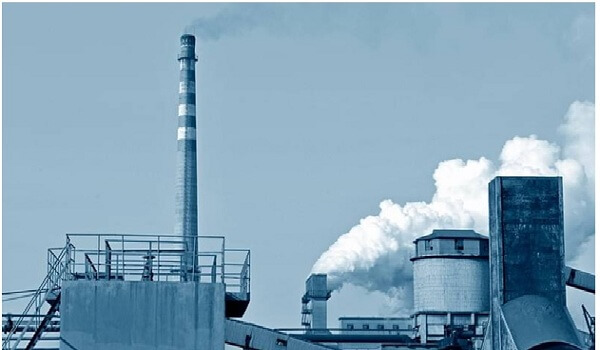
India’s carbon emissions are expected to increase by 4.5% from coal, 3.6% from oil, 11.8% from natural gas and 4% from cement, according to a study released in Baku at COP29.Given current emissions rates, it is estimated that the global average temperature could rise by more than 5 degrees in the next six years, and there is a 50% chance that it will rise permanently.This year, the 5-degree limit could be crossed for the first time.Carbon budget: This is the amount of CO2 emissions that would limit global temperature rise to a set level. In this case, the Paris Agreement’s goal is to limit it to 1.5 degrees Celsius above pre-industrial levels.
Key points
- Global fossil fuel-based CO2 emissions are projected to reach a record high of 37.4 billion tonnes this year.
- The largest contributors to global fossil CO2 emissions in 2023 were China (31%), the US (13%), India (8%), and the EU (7%).
- These four sectors account for 59% of global fossil CO2 emissions, while the rest of the world contributes 41%.
Land use change and reforestation
- Global emissions from land use changes such as deforestation have decreased by 20% over the past ten years.
- Reforestation and new forests have balanced about half of the emissions caused by permanent deforestation.
Carbon sinks (CO2 absorption)
- Land and oceans together have absorbed about half of total CO2 emissions, although climate change has had a negative impact on them.
- The oceans have absorbed an average of 10.5 billion tons of CO2 over the past decade, 26% of total emissions, but climate change has reduced its absorption capacity by 5.9%.
El Niño and Climate Impacts
- Land CO2 absorption decreased in 2023 due to El Niño, but it is expected to return to normal levels in the second quarter of 2024 as it ends.
Global Carbon Project
- The Global Carbon Project was established in 2001 to develop a common and consensus-based knowledge base in collaboration with the international science community. It aims to support policy discussions and actions to reduce and stop the rising levels of greenhouse gases in the atmosphere.
Key Points
- It is a global research project of Future Earth and is also a research partner of the World Climate Research Programme.
- Its function is to collaborate with the international science community towards slowing and ultimately stopping the increase of greenhouse gases.
Partner organizations
- The Global Carbon Project works closely with organizations such as the International Geosphere-Biosphere Programme, the World Climate Programme, the International Human Dimensions Programme on Global Environmental Change, and Diversitas under the Earth System Science Partnership.
- The project aims to strengthen global action and research on environmental change to address the challenges of climate change.