

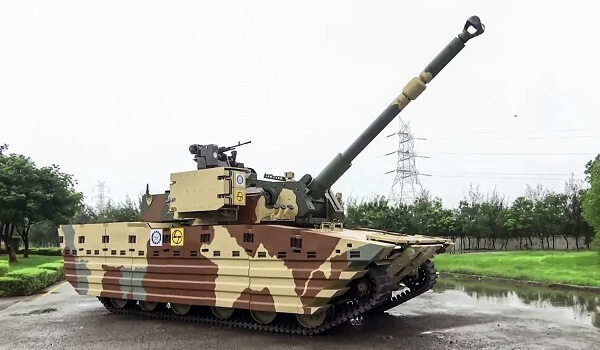
The initial automotive test of the Indian light tank ‘Zoravar’ has been conducted. The first phase of the developmental field firing trial of the Indian light tank was successful. The field trial has successfully accomplished the desired objectives in desert areas. This test was successfully conducted by the Defense Research and Development Organization (DRDO).
Zorawar Light Tank
- The Zorawar light tank is being developed to operate in difficult terrains, especially at high altitudes, where quick movement and flexibility are crucial.
- It was designed by the Combat Vehicles Research & Development Establishment (CVRDE) in partnership with Larsen & Toubro Limited, a major Indian company.
Development and Objectives
- The preliminary trials were conducted to see how the tank performs in tough conditions, such as deserts.
- The Zorawar showed it could hit targets accurately during firing tests, proving its effectiveness and suitability for future military missions.
- The development of the Zorawar involved the participation of many Indian companies, including Micro, Small, and Medium Enterprises (MSMEs).
- This highlights India’s efforts to strengthen its domestic defense manufacturing capabilities, reducing dependence on foreign suppliers.
- India’s Defence Minister, Rajnath Singh, called this testing a significant step toward making India more self-reliant in defense systems. This comes at a time when India is focused on building its military strength to deal with regional security challenges.
Zorawar Singh
- Zorawar Singh, after whom the tank is named, was a famous Dogra general in the early 19th century.
- He is known for his military campaigns in Ladakh and Tibet. Born in 1786, he is remembered for his strategic brilliance and ability to win battles in harsh environments.
- He died in 1841 during a campaign in Tibet, symbolizing the tough conditions he faced during his military career.
NOTE
- In 2021, the Indian Army issued a request to buy 350 light tanks that weigh less than 25 tonnes. These tanks are needed to improve the Army’s flexibility and capability in difficult areas, especially in high-altitude regions.
- The India-China standoff in Eastern Ladakh increased the need for light tanks. Initially, the Army did not think they needed these vehicles, but as military tensions grew, especially during confrontations at the Kailash range, it became clear that light tanks could be vital for operations in high-altitude areas.