

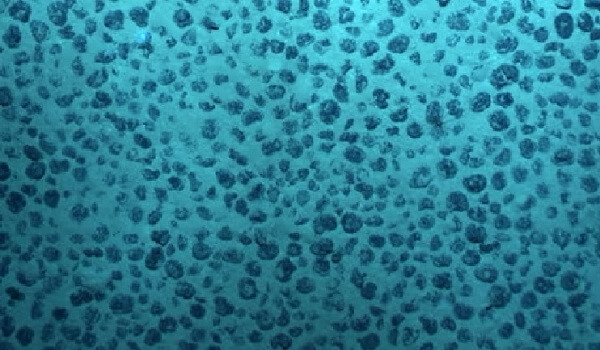
Scientists have discovered “dark oxygen” on the ocean floor. It is apparently produced by polymetallic nodules, metal deposits scattered on the ocean floor. A recent research study published in Nature Geoscience shows that oxygen is produced from mineral deposits scattered 4,000 meters below the sea surface on the sea floor of the Clarion-Clipperton Zone (CCZ) of the Pacific Ocean. In the Clarion-Clipperton zone, there are coal-like mineral rocks, called polymetallic nodules, which usually contain manganese and iron. Scientists have found that these nodules produce oxygen without the process of photosynthesis. At such depths in the ocean, where no sunlight can penetrate, oxygen is produced by the metal “nodules”. This metal splits seawater (H2O) into hydrogen and oxygen. About half of the world’s oxygen comes from the ocean, but scientists previously believed that it was entirely produced by marine plants using sunlight to photosynthesize. Plants on land also use the same process, where they absorb carbon dioxide and produce oxygen.
Oxygen is a gas that makes life possible on the planet. It is a well-established fact that humans and many other animals take in oxygen and release carbon dioxide, forming a cycle of respiration. However, it may be wrong to assume that all the planet’s oxygen exists only on land.
Dark Oxygen
- It is well established that organisms such as green plants, algae and plankton use sunlight to produce oxygen using the process of photosynthesis.
- This produced oxygen becomes the life-source of many organisms on the planet, including humans. In cases where photosynthetic organisms are present inside the ocean, the oxygen thus produced is cycled into the depths of the ocean.
- Earlier studies conducted in the deep sea have shown that organisms there do not produce oxygen. They only consume it.
- However, the results obtained by Andrew Sweetman and his team were different as they challenged this belief.
- What they discovered was the possibility of oxygen production without photosynthesis. The marine scientist further said that such unexpected findings need to be considered carefully.
- Additionally, the oceanographer said that understanding the production of oxygen could prove to be important, as it could provide information about the origin of life on the planet.